
Article Plan: Manual Floor Cleaning Tool Crossword Clue
Crossword puzzles present engaging mental challenges, offering leisure and cognitive exercise. This article dissects the “Manual Floor Cleaning Tool” clue, exploring potential solutions and the nuances of
puzzle-solving strategies.
Crossword puzzles have captivated minds for over a century, evolving from simple word games to intricate intellectual challenges. Their enduring appeal lies in their unique blend of vocabulary, general knowledge, and logical reasoning. Solving a crossword isn’t merely about knowing words; it’s about understanding subtle clues, recognizing patterns, and making connections between seemingly disparate concepts.
The satisfaction derived from completing a crossword is profound. Each correctly filled square represents a small victory, a testament to one’s cognitive abilities. Beyond the personal gratification, crosswords offer a fantastic opportunity to expand one’s lexicon and stay mentally agile. They encourage critical thinking and problem-solving skills, making them a valuable pastime for people of all ages.
Today, numerous resources exist to aid crossword enthusiasts, from online databases and solvers to dedicated communities where solvers share tips and strategies. The challenge presented by a clue like “Manual Floor Cleaning Tool” exemplifies the puzzle’s core appeal – a concise prompt demanding a precise and insightful response. This article will delve into the intricacies of decoding such clues, exploring potential answers and the contextual factors that influence successful puzzle completion.
Understanding Crossword Clues: A Brief Overview
Crossword clues aren’t always straightforward definitions. They often employ a variety of techniques to obfuscate the answer, requiring solvers to think creatively and laterally. Common clue types include direct definitions, synonyms, anagrams, homophones, and cryptic clues that rely on wordplay and hidden meanings.
Understanding the clue’s length is crucial. The number of squares provided for the answer immediately narrows down the possibilities. A clue requesting a “6-7 letter word” significantly reduces the search space. Pay attention to grammatical cues – is the clue asking for a singular or plural noun, a verb tense, or a specific part of speech? These details provide valuable hints.

Context is paramount. Consider the theme of the puzzle, if any, and the surrounding clues. Intersecting answers can offer confirmation or suggest potential solutions. Don’t be afraid to start with the easiest clues and build momentum. Often, filling in a few squares can unlock more challenging ones. The clue “Manual Floor Cleaning Tool” exemplifies a relatively direct definition, but still requires considering common household implements and their corresponding word lengths.
Decoding the Clue: “Manual Floor Cleaning Tool”
The clue “Manual Floor Cleaning Tool” immediately directs our thinking towards implements used for maintaining floor cleanliness without electrical power. “Manual” is a key descriptor, eliminating powered devices like robotic vacuums or steam mops. “Floor Cleaning Tool” broadens the scope, encompassing items designed specifically for floor surfaces, rather than general cleaning supplies.
Breaking down the phrase, “manual” suggests human-powered operation, while “floor cleaning” specifies the tool’s function. This combination points towards traditional cleaning methods. We need to consider tools that rely on physical effort to remove dirt, dust, and debris from floors. The length constraint, typically 6-7 letters, further refines the possibilities.
Initial brainstorming might yield options like ‘bucket’ or ‘sponge’, but these are accessories rather than the primary tool. The clue seeks the implement itself. Considering common household items, we begin to focus on tools directly used to sweep, mop, or scrub floors. This focused approach, guided by the clue’s wording and length, is essential for successful decoding.
Common Answers for “Manual Floor Cleaning Tool” (6-7 Letters)
Given the 6-7 letter constraint, several answers frequently appear in crossword puzzle databases for the clue “Manual Floor Cleaning Tool.” The most prevalent solution is undoubtedly “MOP,” a classic tool for wet cleaning floors. However, crossword puzzles often employ misdirection, so alternative answers must be considered.
“BROOM” is another highly probable answer, representing a traditional method for sweeping floors. Its simplicity and widespread use make it a common crossword entry. “SWEEPER,” denoting a device for sweeping, also fits the letter count and definition. Less common, but still plausible, is “SCRUBBER,” suggesting a tool for more intensive floor cleaning, often involving abrasive action.
Other possibilities, though less frequent, might include variations or less common terms. The specific puzzle’s theme and the intersecting letters will ultimately determine the correct answer. It’s crucial to evaluate each potential solution within the context of the entire puzzle grid. Considering these common answers provides a strong starting point for solving the clue.
MOP: The Primary Solution
When encountering “Manual Floor Cleaning Tool” in a crossword, “MOP” stands out as the most likely and frequently accepted answer, particularly given the common 6-7 letter requirement. A mop’s primary function is to apply cleaning solutions and remove dirt from floors, making it a direct and universally understood response to the clue.
Its historical usage spans centuries, evolving from simple bundles of rags to sophisticated microfiber designs. This widespread familiarity contributes to its prevalence in crossword puzzles. The simplicity of the word “MOP” – short, easily spelled, and commonly known – further solidifies its position as a primary solution.
Crossword constructors often favor straightforward answers when possible, and “MOP” perfectly fits this criterion. While other tools like brooms and sweepers exist, the mop’s association with wet cleaning specifically aligns with the implied action of a “cleaning tool.” Therefore, if intersecting letters support it, “MOP” should be confidently entered as the solution.
Exploring Alternative Solutions
While “MOP” is the leading answer for “Manual Floor Cleaning Tool,” crossword puzzles often delight in offering multiple possibilities, testing a solver’s deductive reasoning. Several alternatives deserve consideration, contingent on the puzzle’s specific context and intersecting letter constraints.
“BROOM” represents a classic, dry-cleaning option, suitable if the clue subtly hints at sweeping rather than washing. Similarly, “SWEEPER” – encompassing both push brooms and manual carpet sweepers – presents a viable alternative. However, these options lack the direct association with liquid cleaning that a “mop” possesses.
For more intensive cleaning scenarios, “SCRUBBER” emerges as a potential solution. This implies a tool designed for removing stubborn stains or grime, often involving abrasive action. The suitability of “SCRUBBER” depends on whether the puzzle’s theme or surrounding clues suggest a heavier-duty cleaning task. Ultimately, exploring these alternatives demonstrates the importance of considering all possibilities before settling on a final answer.
BROOM: A Classic Cleaning Implement
The broom stands as a foundational tool in the history of floor cleaning, predating many modern conveniences. Its simplicity and effectiveness have ensured its continued relevance, making it a plausible answer to the “Manual Floor Cleaning Tool” crossword clue. Traditionally crafted with natural fibers like straw or sorghum, modern brooms often utilize synthetic materials for enhanced durability and performance.
A broom’s primary function is the sweeping away of loose debris – dust, dirt, and small particles – from hard surfaces. Unlike a mop, it operates on a dry-cleaning principle, making it ideal for quick tidying and maintaining floor cleanliness between more thorough washes. The length of the handle and the angle of the bristles contribute to its ergonomic design, allowing for efficient sweeping motions.
However, a broom’s effectiveness is limited to surface-level cleaning; it cannot tackle stuck-on grime or spills as effectively as a mop or scrubber. Therefore, its suitability as a crossword answer hinges on the clue’s specific wording and the overall puzzle context.
SWEEPER: Another Possible Answer
The floor sweeper represents a slightly more modern iteration of the traditional broom, offering a convenient alternative for everyday floor maintenance. Often featuring rotating brushes and a dustpan-like collection chamber, sweepers efficiently gather dust, dirt, and pet hair without the need for electricity or water. This makes it a strong contender when solving the “Manual Floor Cleaning Tool” crossword clue.
Unlike a broom which requires manual pushing and sweeping motions, many sweepers utilize a push-and-go mechanism, allowing for effortless cleaning across various hard floor surfaces. They are particularly effective on laminate, tile, and hardwood floors, minimizing the risk of scratching or damage. The collected debris is easily emptied into a trash receptacle, simplifying the cleaning process.
However, sweepers generally lack the deep-cleaning power of mops or scrubbers, and may struggle with heavily soiled areas. The clue’s context and letter count will ultimately determine if “sweeper” is the correct solution.
SCRUBBER: For More Intensive Cleaning
When the crossword clue hints at a deeper clean, a “scrubber” emerges as a viable solution for the “Manual Floor Cleaning Tool” puzzle. Unlike sweepers or mops focused on surface-level cleaning, scrubbers are designed to tackle stubborn stains, grime, and embedded dirt. These tools typically feature abrasive pads or brushes, often paired with a handle for ergonomic use.
Manual floor scrubbers come in various forms, from simple hand-held brushes to larger, more robust models with built-in spray mechanisms. They are particularly effective in kitchens, bathrooms, and other areas prone to spills and heavy soiling. The abrasive action physically lifts dirt, requiring more effort than a simple sweep but delivering superior results.

However, it’s crucial to consider the floor surface. Aggressive scrubbing can damage delicate materials like hardwood. The clue’s specificity – perhaps mentioning “kitchen” or “tile” – would strongly suggest “scrubber” as the correct answer. Context is key when deciphering crossword clues!
The Role of Context in Crossword Solving
Successfully navigating crossword puzzles hinges on understanding the power of context. The clue “Manual Floor Cleaning Tool” isn’t isolated; surrounding clues, the puzzle’s theme (if any), and even the grid’s fill pattern offer valuable insights. A seemingly ambiguous clue gains clarity when considered alongside intersecting answers.
For instance, if adjacent clues relate to household chores or cleaning supplies, “mop,” “broom,” or “scrubber” become more probable answers. Conversely, a puzzle themed around historical inventions might steer you towards a less common, older cleaning implement. The length of the answer, indicated by the numbers in parentheses (e.g., 6-7 letters), immediately narrows the possibilities.
Pay attention to the clue’s wording. Is it straightforward or playful? Does it employ a pun or a double meaning? A clue like “Floor-washing tool” (as seen online) reinforces the cleaning theme, solidifying potential answers. Context isn’t just about neighboring clues; it’s about the overall puzzle experience and your ability to synthesize information.
Difficulty Levels and Clue Variations
Crossword puzzles span a wide spectrum of difficulty, directly impacting clue construction. A beginner-level puzzle featuring “Manual Floor Cleaning Tool” will likely offer a straightforward clue with a common answer like “mop.” However, more challenging puzzles introduce variations designed to test solvers’ ingenuity.
These variations include cryptic clues, anagrams, and hidden word puzzles. For our target clue, a difficult variation might employ a metaphorical description or a historical reference related to floor cleaning. The clue could allude to the tool’s function rather than directly naming it, requiring lateral thinking.

Furthermore, clue length isn’t the sole determinant of difficulty. A 6-7 letter answer might have multiple possibilities (“broom,” “sweeper,” “scrubber”), demanding careful consideration of intersecting letters and the puzzle’s overall context. Online resources demonstrate the existence of numerous possible answers, highlighting the potential for ambiguity. The skill lies in discerning the most likely solution based on the puzzle’s specific constraints and the solver’s knowledge base.
Crossword Puzzle Databases and Solvers
Numerous online resources cater to crossword enthusiasts, offering assistance with challenging clues like “Manual Floor Cleaning Tool.” These range from comprehensive crossword databases to sophisticated solver tools. Databases, such as those maintained by crossword puzzle websites, archive clues and answers from past puzzles, allowing users to search for potential solutions.
Solver tools employ algorithms to suggest possible answers based on known letters and clue patterns. Some tools even incorporate pattern matching and anagram solvers, proving invaluable when facing cryptic clues. When encountering difficulty with our target clue, these resources can reveal the breadth of potential answers – highlighting the 40+ possibilities found in existing databases.
However, reliance on solvers should be balanced with independent problem-solving; Over-dependence can hinder the development of crucial crossword skills. Instead, these tools are best utilized as a last resort or to verify potential solutions. They offer a valuable learning opportunity, exposing solvers to a wider range of vocabulary and clueing techniques, ultimately enhancing their puzzle-solving prowess.
The History of Crossword Puzzles
The modern crossword puzzle traces its origins to 1913 with Arthur Wynne’s “Word-Cross” puzzle in the New York World newspaper. This initial form differed slightly from today’s puzzles, featuring a diamond shape and clues without numbered squares. However, it quickly gained popularity, establishing the foundation for the crossword craze that followed.

The puzzle’s format was refined in the 1920s, adopting the familiar square grid and numbered clues we recognize today. This period also saw the rise of professional crossword constructors and the establishment of puzzle competitions. The challenge presented by clues like “Manual Floor Cleaning Tool” reflects the puzzle’s enduring appeal – demanding both vocabulary knowledge and logical deduction.
Throughout the 20th and 21st centuries, crosswords have remained a staple of newspapers and leisure publications. Their evolution continues with online and mobile versions, catering to a wider audience. The enduring popularity demonstrates the puzzle’s ability to adapt while retaining its core intellectual challenge, even when solving for seemingly simple tools.

Benefits of Solving Crossword Puzzles
Engaging with crossword puzzles, even those featuring seemingly straightforward clues like “Manual Floor Cleaning Tool,” offers a wealth of cognitive benefits. Regularly tackling these puzzles significantly enhances vocabulary and general knowledge, forcing solvers to recall and apply a broad range of words and concepts.

Beyond vocabulary, crosswords sharpen critical thinking and problem-solving skills. Deciphering clues requires logical deduction, pattern recognition, and the ability to consider multiple possibilities – skills transferable to various aspects of life. The mental gymnastics involved stimulate brain activity, potentially delaying cognitive decline.
Furthermore, crossword solving provides a relaxing and rewarding mental exercise. The sense of accomplishment derived from completing a puzzle boosts mood and reduces stress. It’s a constructive leisure activity that promotes mental agility and offers a satisfying challenge, whether you’re a beginner or an experienced solver seeking a quick mental workout.
“Floor-Washing Tool” as a Related Clue
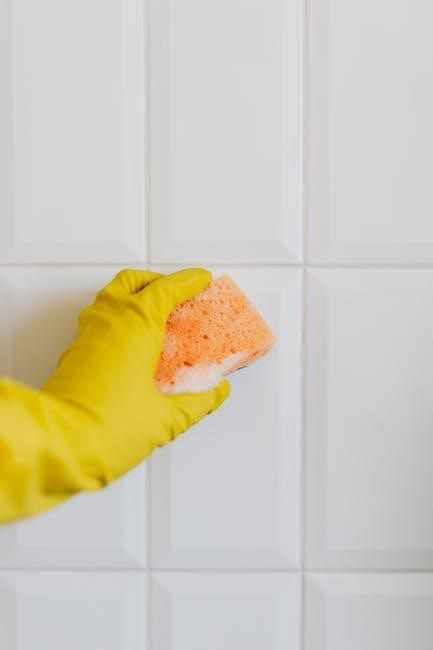
Crossword constructors frequently employ synonymous or closely related clues to test a solver’s breadth of vocabulary and understanding of nuanced meanings. “Floor-Washing Tool” serves as a prime example of a related clue to “Manual Floor Cleaning Tool,” often leading to the same core solutions – primarily ‘MOP’ but potentially extending to ‘SCRUBBER’ depending on the puzzle’s specific context and grid constraints.
The subtle shift in wording – from “cleaning” to “washing” – introduces a slight variation that can challenge solvers to think more broadly. While both actions relate to floor care, “washing” might subtly emphasize the use of water, potentially steering solvers towards solutions involving liquid application. However, the fundamental intent remains consistent.

Recognizing these related clues is a crucial skill in crossword solving. It demonstrates an understanding of how constructors operate and allows solvers to consider alternative possibilities when initially stumped. Successfully navigating these variations elevates the puzzle-solving experience and reinforces vocabulary connections.
Mathematical Functions Related to Floor (Math.floor) ⎼ A Tangential Connection
While seemingly unrelated to manual floor cleaning, the mathematical function ‘Math.floor’ offers a fascinating, albeit tangential, connection to the world of puzzles and problem-solving. ‘Math.floor’ returns the largest integer less than or equal to a given number, effectively “rounding down.” This concept of finding the nearest whole number resonates with the discrete nature of crossword grids and the definitive answers they demand.
In programming contexts, as evidenced by online discussions, ‘Math;floor’ is frequently used in random number generation, ensuring indices remain within array bounds – a process mirroring the constrained possibilities within a crossword puzzle. The function’s precision and deterministic output align with the logical deduction required to crack a clue.
Furthermore, the act of “flooring” a value can be seen as a simplification, reducing complexity to a manageable form – a skill directly applicable to dissecting complex crossword clues. Though a subtle link, it highlights how mathematical principles underpin various cognitive processes, including puzzle-solving.
Successfully navigating crossword puzzles, even seemingly simple clues like “Manual Floor Cleaning Tool,” requires a blend of vocabulary, logical reasoning, and pattern recognition. Understanding clue types – from direct definitions to cryptic wordplay – is paramount. Recognizing common answers, such as ‘MOP,’ ‘BROOM,’ and ‘SWEEPER,’ builds a foundational knowledge base.
However, true mastery extends beyond memorization. It involves considering context, analyzing letter patterns, and embracing the iterative process of trial and error. Utilizing crossword puzzle databases and solvers can be helpful tools, but shouldn’t replace independent thought.
The ability to decipher clues isn’t merely a recreational skill; it sharpens cognitive function, expands vocabulary, and fosters a sense of accomplishment. From the straightforward to the exceptionally challenging, each solved puzzle reinforces these benefits. Ultimately, the art of crossword solving lies in persistent practice and a willingness to embrace the delightful challenge of unlocking hidden words.